Introduction for people who want to know more about karate and its terminology
Bunkai
noun
Bunkai (分解), literally meaning "analysis" or "disassembly", "is a term used in Japanese martial arts referring to process of analysing kata and extracting fighting techniques from the movements of a 'form' (kata). The extracted fighting techniques are called Oyo."
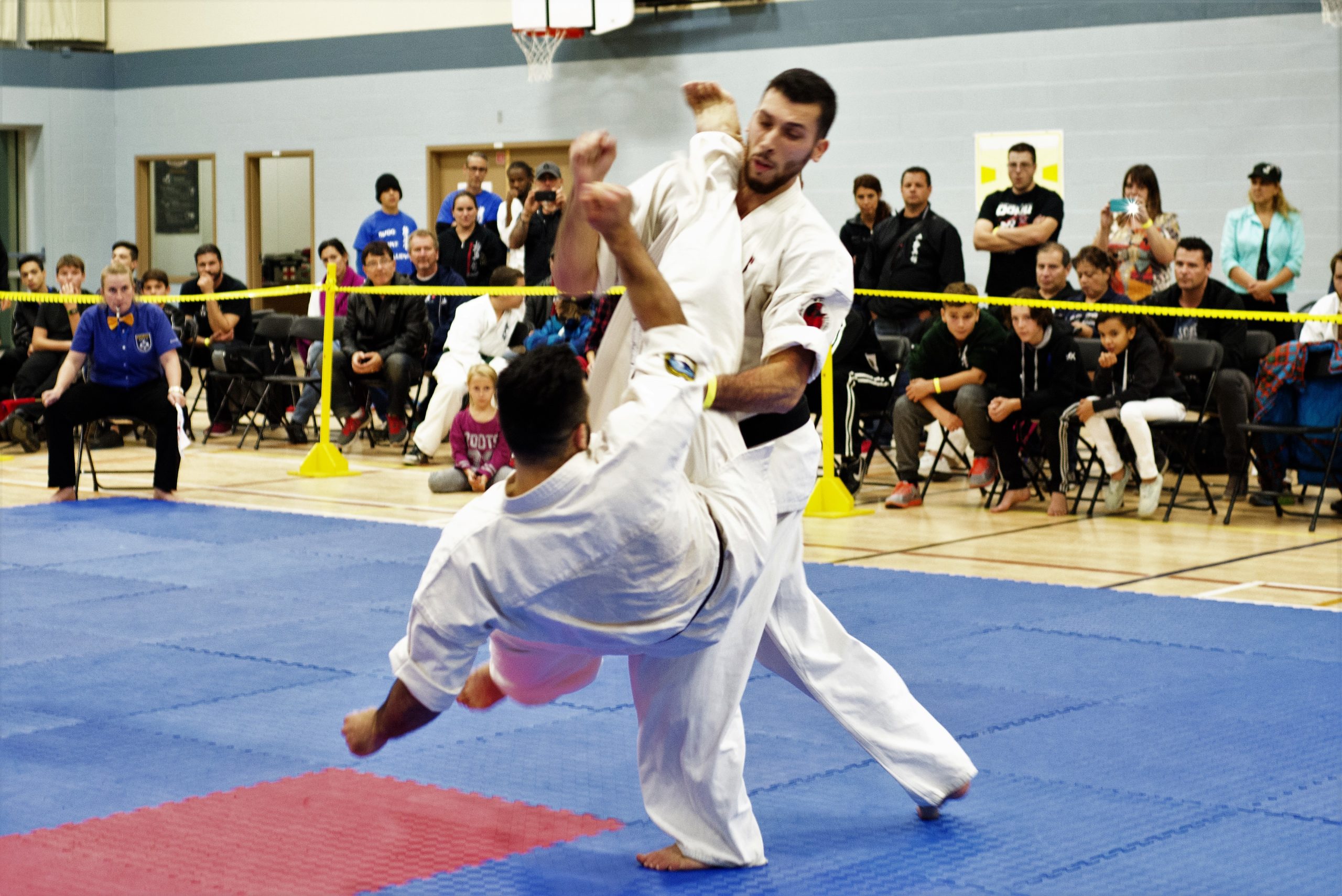
Example: Bunkai is usually performed with a partner or a group of partners which execute predefined attacks, and the student performing the kata responds with defenses, counterattacks, or other actions, based on a part of the kata.
sk: Bunkai
Dojo
noun
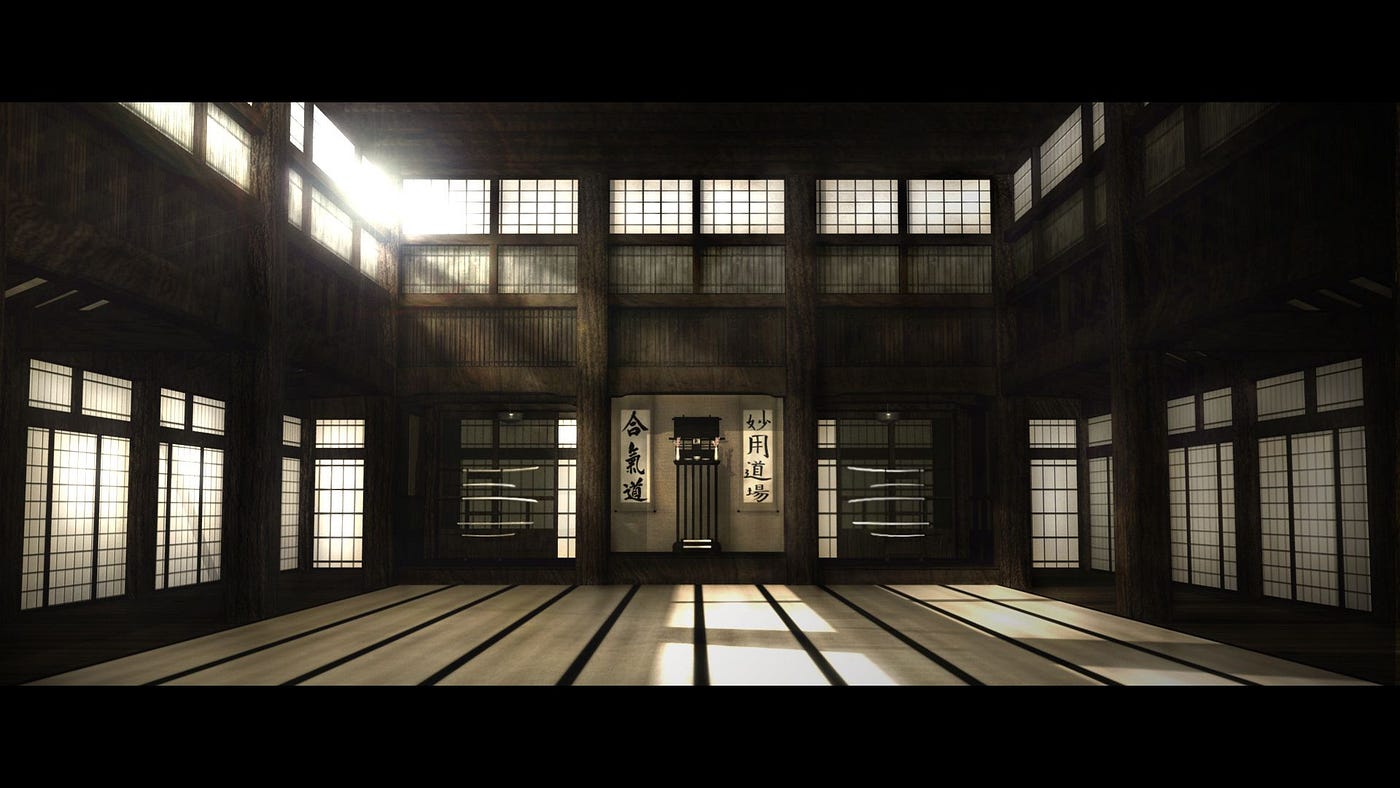
A dōjō (道場, Japanese pronunciation: [doꜜː(d)ʑoː] is a hall or place for immersive learning or meditation. This is traditionally in the field of martial arts, but has been seen increasingly in other fields, such as meditation and software development. The term literally means "place of the Way" in Japanese.
Example: The word dōjō originates from Buddhism.
A proper Japanese martial arts dōjō is considered special and is well cared for by its users.
Shoes are not worn in a dōjō.
sk: dojo
Karateka
noun
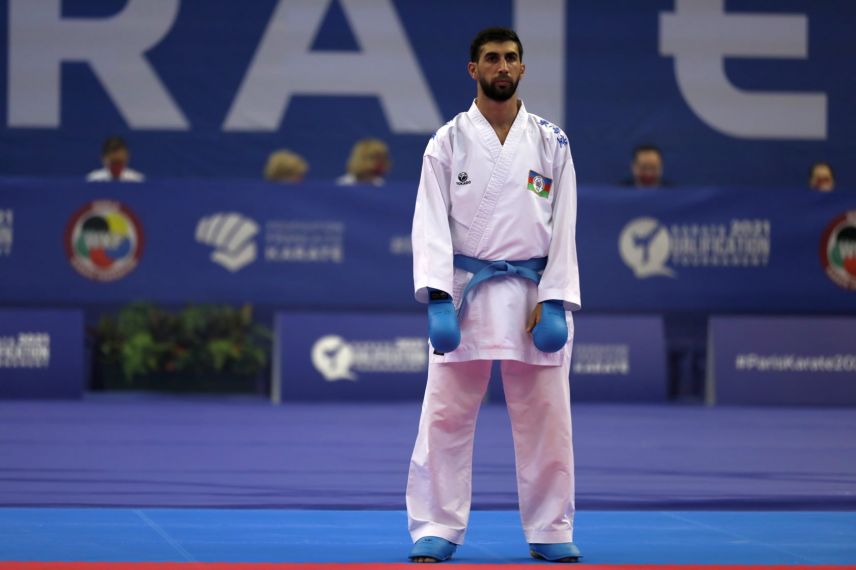
Karateka – A student of Karate.In fact, a beginner karateka or an already wise sensei can be a karateka
Example: A karate practitioner is called a karateka (空手家).
sk: Karateka
Kata
noun
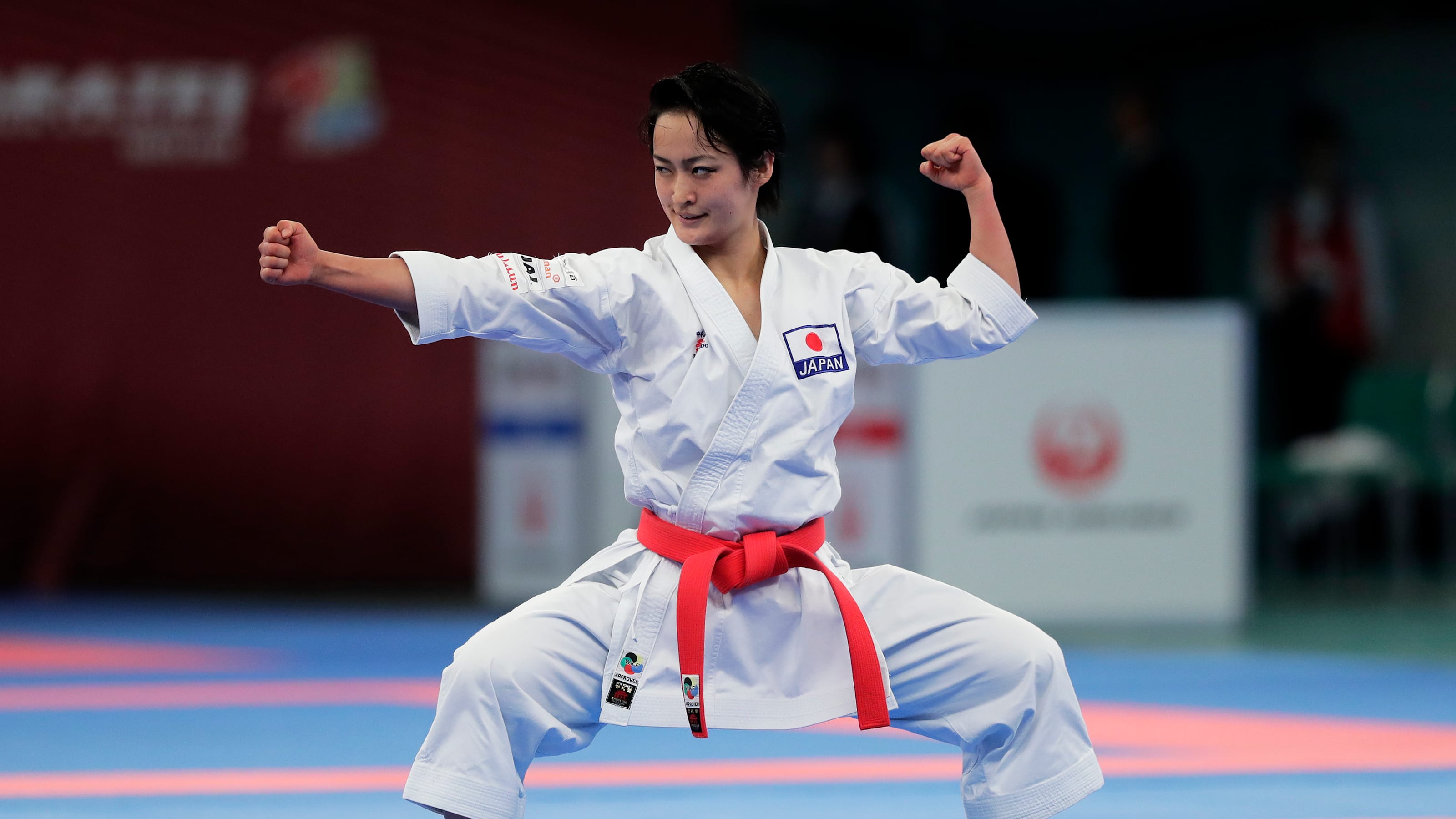
Kata (Japanese: 形, or more traditionally, 型; lit. "form") is a Japanese word describing detailed patterns of movements practiced either solo or in pairs. Karate kata are executed as a specified series of a variety of moves, with stepping and turning, while attempting to maintain perfect form.
Example: Kata were created as solo forms containing the concatenated sequences of movements of the defensive portions of the drills.
Kata originated from the practice of paired attack and defence drills by ancient Chinese martial artists, these were known as the "five form fists" or "five patterns" after the fighting methods of five different animals.
sk: Kata
Ki
noun
Ki is the term used in the Japanese Martial Arts for a type of intrinsic energy that is present in everyone but is developed to a greater extent in martial arts practitioners through correct breathing and strengthening exercises. The Chinese equivalent of Ki is Qi (or Chi).
Example: Today, such a meaning as "Ki" loses its meaning.But there are people who believe in it
sk: Ki
Kiai
noun
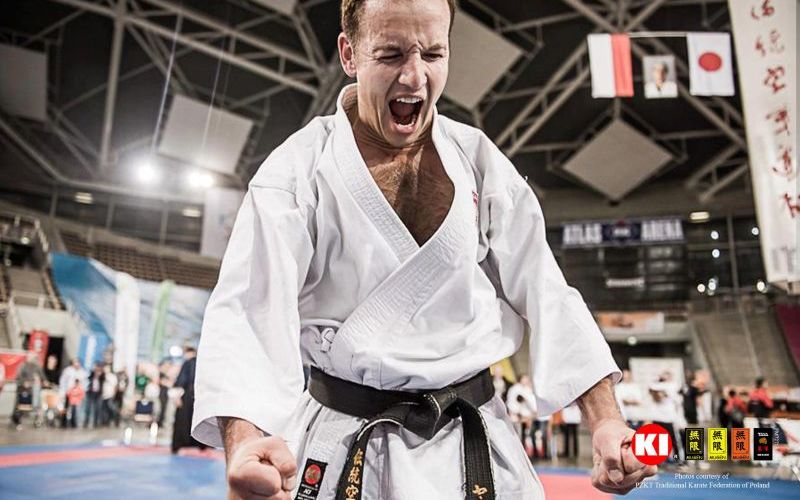
Kiai is a powerful, penetrating yell. The stomach is tensed to its maximum and the forceful pressure from the bottom of the stomach pushes out the air in an explosive way.
Example: The purpose of Kiai, besides a greater physical and mental focusing on the power, is to destroy the breathing rhythm and the mental balance of the opponent.At a high level Kiai is executed with a maximally contracted stomach but relaxed upper body to ease further actions and reactions.
sk: Kiai
Kihon
noun
Kihon (basic techniques) is the fundamental part of karate training. During this kind of training it is easier to focus on both physical and mental power.
Example: Kihon is not only practicing of techniques, it is also the budōka fostering the correct spirit and attitude at all times.
Kihon techniques tend to be practiced often, in many cases during each practice session.
sk: Kihon
Kime
noun
During practice, karatekas often use the Japanese word Kime.By this means maximum and quickly focused contraction and decontraction of all muscles to create an explosive energy for a brief moment. Karate-ka at different levels (Kyu or Dan grades) has different ways and means to create Kime.
Example: At first you are taught to have Kime in one element. The next level is to be able to execute several techniques in rapid sequence but still be able to attain the same power as in the first technique.
sk: Kime
Kokyu
noun
Kokyu refers to 'breath' or 'breathing'. We generate physical power and movement more easily when exhaling, or in some cases when we stop our breath. Usually when delivering strikes to an opponent it is best to breath out while striking.
Example: Karatekas train Kokyu every day
sk: Kokyu
Kumite
noun
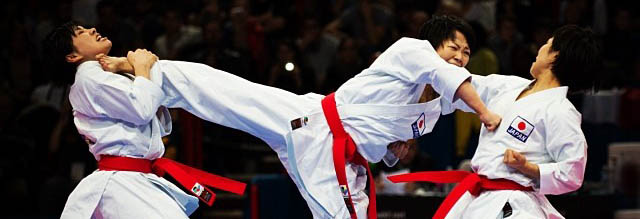
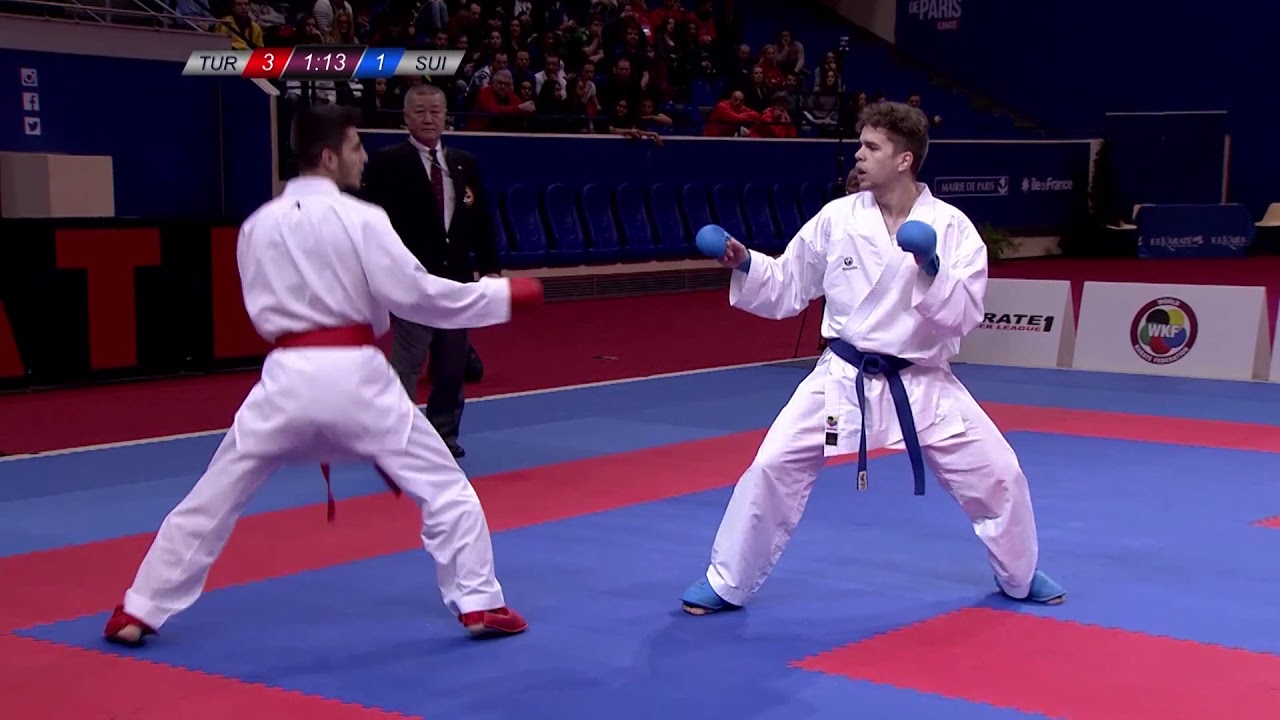
Kumite (Japanese: 組手, literally "grappling hands") is one of the three main sections of karate training, along with kata and kihon. Kumite is the part of karate in which a person trains against an adversary.
Kumite can be used to develop a particular technique or a skill (e.g. effectively judging and adjusting one's distance from one's opponent) or it can be done in competition.
Example: Since the word "kumite" refers to forms of sparring, it covers a vast range of activities. In traditional Shotokan karate, the first type of kumite for beginners is gohon kumite.
sk: Kumite
Kyu
noun
Kyu rankings are used in Karate (as well as many other Japanese arts) to denote a student's progress in the technique.
Example: Therefore 1st Kyu (or brown Belt) is the most advanced "student" level.
sk: Kyu
Maai
noun
Maai (間合い), translating simply "interval", is a Japanese martial arts term referring to the space between two opponents in combat; formally, the "engagement distance".
Example: The concept of maai incorporates not just the distance between opponents, but also the time taken to cross the distance and the angle and rhythm of attack; collectively, these all factor in to the exact position from which one opponent can strike other – e.g., a faster opponent's maai is farther away than a slower opponent.
sk: Maai
Obi
noun
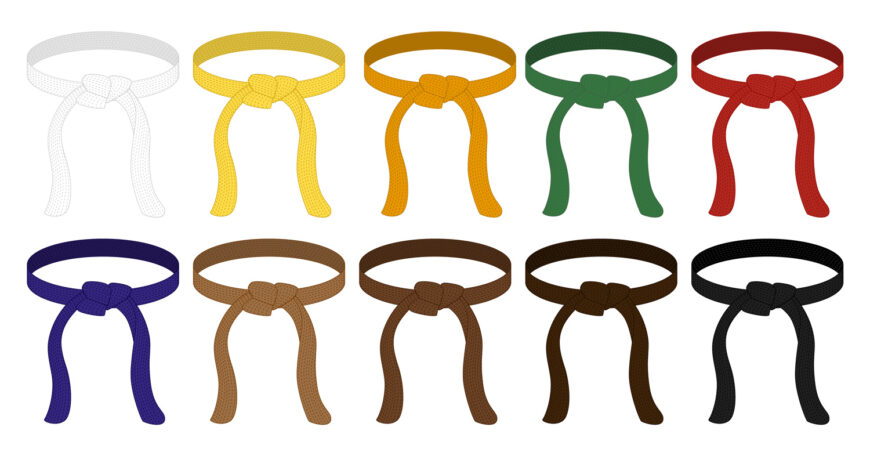
Many Japanese martial arts feature an obi (Japanese: 帯) as part of their exercise outfit. Such an obi is often made of thick cotton and is about 5 cm wide. The martial arts obi are most often worn in the koma-musubi knot (square knot); in practice where a hakama is worn, the obi is tied in other ways.
Example: In many martial arts, the colour of the obi signifies the wearer's skill level. Usually the colours start from white for beginners and end in black or red-and-white for masters.
sk: Obi
Tameshiwari
noun
Breaking is a martial arts technique that is used in competition, demonstration and testing. Breaking is an action where a martial artist uses a striking surface to break one or more objects using the skills honed in their art form. The striking surface is usually a hand or a foot, but may also be a fingertip, toe, head, elbow, knuckle, or knee.
Example: Traditional Japanese martial art schools place little, if any, emphasis on board-breaking, although the art of breaking objects was known as tameshiwari (試し割り), while the similar practice of Tameshigiri or 'test cutting' is used in sword arts.
sk: Tameshiwari
Uke
noun
Uke (受け) (IPA: [ɯke]) is in Japanese martial arts the person who "receives" a technique. The exact role of uke varies between the different arts and often within the art itself depending on the situation. For instance, in aikido, judo kata, and bujinkan ninjutsu, uke initiates an attack against their partner, who then defends, whereas in competition judo, there is no designated uke.
Example: The action of uke is called "taking ukemi (受け身)." Literally translated as "receiving body", it is the art of knowing how to respond correctly to an attack and often incorporates skills to allow one to do so safely. These skills can include moves similar to tumbling and are often used as a valid exercise in itself. In aikido and judo training for instance, many classes begin with ukemi training as conditioning.
sk: Uke
Yakusoku Kumite
noun
In karate, yakusoku kumite is a group of pre-organized sparring forms of karate that are designed to equip the practitioner with the basic skills needed to perform any of the sparring forms of jiyu 自由 kumite.
Example: A sparring that is pre arranged.For example, sparring between two karatekas.
sk: Yakusoku Kumite
Yuudansha
noun
Holder of a dan rank, dan player (in go or shogi), black belt (in martial arts).
Example: Dan rank holders are called Yuudansha. They are respected and wise.
sk: Yuudansha
Zanshin
noun
Zanshin is a psycho-physical state of consciousness when both body and mind are prepared to the maximum and are deeply concentrated.
Example: During competition Zanshin is one of the criteria of point-winning technique.
sk: Zanshin
Zarei
noun
Bowing down or lowering your head.
Example: To show respect to an elder or to a sensei, students use zarei.
sk: Zarei
Zazen
noun
In Zazen (meditation) the eyes are slightly closed and the breathing is totally controlled. You inhale deeply through the nose and exhale through the mouth. The back is straight, the shoulders are relaxed but the body should be in a state of readiness.
Example: Meditation in Zazen can also be done with crossed legs.